
My lazy sourdough method
I've been baking bread for 18 years and I've never weighed flour or water, I don't routinely discard starter, and I don't fold-and-stretch by the clock. Here's my "lazy" approach to sourdough.

I started baking bread when I moved from New York to Raleigh, North Carolina in 2007. Back then I bought my first home—a townhouse on a golf course—and had no interest in growing my own food. I think my garden spaces today are more square footage than that townhouse. My interest in baking bread is simply that I love bread. I ruined a lot of batches with the mistake of using boiling water to create the starter, which killed the yeast. At that time, I was on city water and had no clue about how city and municipal waters could impact the yeast (and human health). If you’re not on well water, check out the Environmental Working Group’s Tap Water Database, which shows lab analyses of waters across the United States.
All of this to say I am not a professional baker (yet - I had planned on renting a kitchen last year to have a seasonal bakery, but the space still isn’t available) and have no credentials other than my sunny honey sourdough won honorable mention in our county beekeeping club’s cooking with honey contest several years ago. 🏆
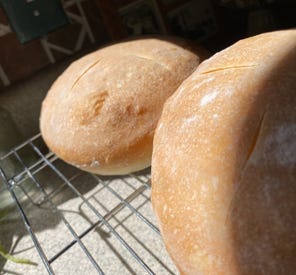
A friend (and TLT subscriber 👋🏻) got started with sourdough this year and she has a lot of questions. What should she do with all the discard? How often to feed? What do you do with the starter when you go out of town?
What to do with the sourdough discard
I feel I’ve been a disappointing resource. I don’t routinely discard any sourdough starter. If the jar gets too full and I’m not baking bread soon, I add some of the starter to a baking sheet and make sourdough crackers. I understand you can also feed the starter to your chickens or add it to your compost. I’m always making something, so most of the time there’s some place to funnel the starter like waffles, pancakes, and, most likely, more bread.
How often to feed your sourdough starter
I don’t follow any rule. I might feed it daily, a few times a day, or I’ll forget and neglect it and feed it 3 or 4 days later when I remember it exists. How much do I feed it? Again, no formula. I’ll grab a teaspoon or a tablespoon, add a heap of flour, run what looks like an equal amount of tap water into the jar, mix, and leave it.
What to do with a sourdough starter if you’re traveling
I don’t do anything with the starter when I go out of town—unless it’s more than 3 or 4 days. In that case, I’ll move it to a clean jar and feed equal amounts of flour and water (same heaping spoon and tap water method), seal the jar, and leave it in the fridge. When I get back, I remove the lid and add a breathable top back and start feeding it again within a day. My alternative: I take the starter with me. For years I took Carrie Breadshaw (my previous starter) with me between home and the mountains. I forgot Carrie Breadshaw at my parents’ home earlier this year, so Jane Dough is my current sourdough. This year I realized this sourdough luggage effort was silly. Now I leave Jane Dough at home and her daughter in the mountains.
Where did sourdough rules come from?
My friend, like many folks, follows very strict rules on weighing flour and water, and timing rises. I’d like to know, who made these sourdough rules? Was sourdough born with these requirements? It’s simply fermented grain with wild yeasts. Whether you feed it X grams of flour or X-ish grams of flour shouldn’t matter.
More lazy sourdough practices
Low knead. I use a bread machine for kneading and the first rise, which is a 90-minute cycle.
Stretch-and-yawn. The strict stretching-and-folding cycles I see folks adhere to on the socialverse don’t make sense to me. After the first rise, I’ll stretch-and-fold once or twice while it rises in a glass bowl. Sometimes it will rise for 2 hours before baking, other times I wait 36 hours or more.
Skip scales. I feed it 1-to-2ish tbsp of flour and cold tap/well water (almost) daily.
My sourdough preferences
Refined sugar free. Since becoming a beekeeper, I don’t add refined sugars to any breads that I bake. Any sugar is honey.
Milling my own flours. Check out my earlier post about milling and growing my own grains. The majority of the flour in what I bake is from a mill in a neighboring county. Usually about a third to half of the flour in a batch of bread dough is from what I mill on the countertop with grains I either grew or that I bought in bulk.
36-hour sour is my favorite. After about day of rising with a few punch-downs, I divide the dough in half. I’ll bake that half, then reserve the rest for an extra-sour batch. I’ll fold-and-stretch the remaining dough once or twice more until baking around the 36-hour mark. The last punch-down is always about 1 hour before baking.
Why sourdough
Many health claims purport that fermented grains have a lower impact on the digestive system, don’t spike blood sugar levels as much as refined and unfermented flours, and help encourage a robust microbiome. However, FRONTIERS IN NUTRITION published a piece in 2023 that helps to show that there’s no substantial research supporting these claims. Aside from formal studies, many people claim to “feel better” when they switch to sourdough. The flavor and texture of naturally-leavened breads is superior, in my opinion. I also feel there’s less reliance on inputs. If you’re baking yeast breads, you’ll always need to buy yeast for each batch of bread. With a sourdough starter, you just need to add a little flour, water, and time—all of which you’ll use for bread baking anyway. There’s no need for buying yeast, or running out of it.
Why lazy sourdough
So far my lazy approach to sourdough has produced thousands of loaves of delicious bread, and who knows how many hours or days I’ve saved not fussing with a scale and dialing in my flour-to-water ratio by the nanogram. I’ll keep letting the sourdough do all the work.
Sourdough pumpkin bread recipe (no sugar added)

If you’re like me, you get frustrated with finding online recipes and then scrolling through a long post just to get to the recipe. I’m doing you a few favors today. One, I’m sharing the recipe first—then you can scroll to the backstory. Two, I’m giving you a bonus recipe. If you’re looking for a place to buy herbs and spices in bulk, check out